
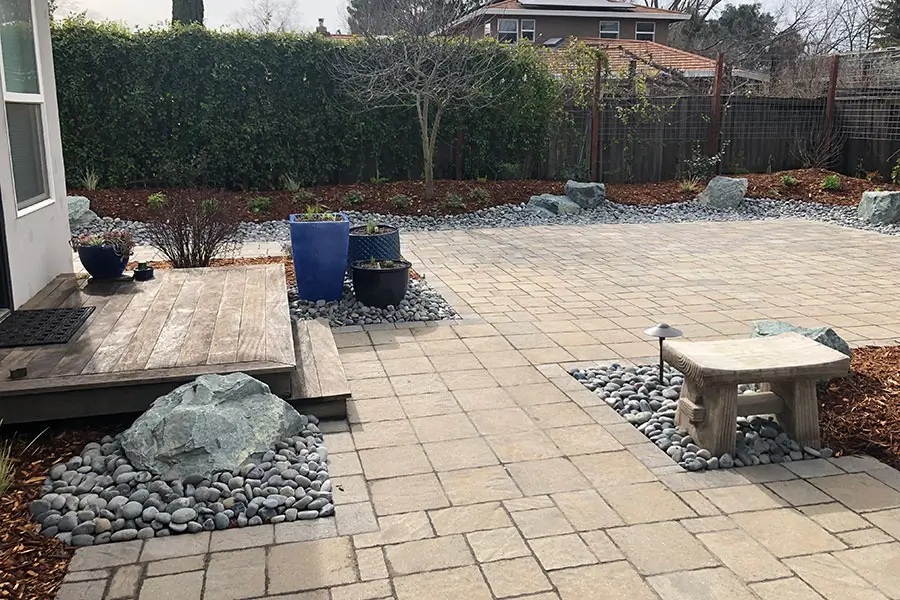
Yes, pavers can be installed during Sacramento winters, and in many cases the results are excellent. The work requires planning around conditions rather than powering through them. That means selecting durable materials, watching the forecast closely, managing base moisture, and ensuring drainage is right before a single paver goes down. Rain matters more than cold in the Sacramento Valley, and saturated subgrade is the real enemy of a stable installation. Homeowners considering paver installation in Sacramento during the off season often find better scheduling availability and a patio that is finished and settled well before spring.
Can You Install Pavers in Cold Weather?
Cold weather does affect materials and installation, though the specifics look different here than they do in a true freeze climate.
Lower temperatures slow the curing of concrete used in bedding, edge restraint, and any poured elements tied into the project. Some materials become more brittle, and adhesives and sealants perform differently below their rated application temperatures. None of this makes winter installation impossible. It means the schedule and the technique need to account for it.
Sacramento’s winter profile is its own consideration. Working on properties across the region, we see very few hard freeze days. What we see instead is sustained rain, tule fog, and heavy clay soils that hold moisture for weeks. Base preparation in December is a moisture management problem far more often than a temperature problem, and that distinction changes how a project gets planned.
Understanding local soil conditions is what makes winter work viable. The expansive clays common through the Valley move with seasonal moisture, and a base compacted at the wrong moisture content will settle unevenly no matter how well the pavers are laid on top of it.
The Best Practices for Winter Paver Installation
Winter installation succeeds in preparation. The practices that matter most:
- Select high quality, durable materials. Dense, low absorption pavers handle seasonal moisture cycling far better than budget alternatives, and they hold color through years of wet winters and intense summer sun.
- Watch the forecast closely. Scheduling around storm windows is standard practice here. Excavation and base work need dry conditions, and installing into a wet forecast compromises everything underneath the surface.
- Manage base temperature and moisture. Protecting the work area with covers keeps the subgrade workable between storms and prevents saturation from undoing days of preparation.
- Get drainage right before anything else. Proper slope, base permeability, and a path for water to exit the system prevent the moisture accumulation that causes heaving and settling.
- Compact thoroughly in lifts. Base material compacted in proper lifts at the right moisture content is the single greatest determinant of whether a patio stays flat in year five.
- Work efficiently within the weather window. Setting pavers, cutting, and securing edge restraint within a defined dry stretch protects the work from mid project weather changes.
Executed properly, a winter installation produces results indistinguishable from summer work. Professional paver installation is largely about what happens below the surface, and the cooler months are actually a good time to do that part right without heat pressure on the crew.
How Cold Weather Affects Paver Materials and Installation
Cold and wet conditions influence performance in several specific ways:
- Subgrade condition: Saturated or frozen ground cannot be properly compacted. Installing over it guarantees settling and uneven surfaces within the first year.
- Adhesive and sealant performance: Most products have minimum application temperatures, and applying below those thresholds compromises bond strength and cure quality.
- Concrete curing: Cold slows curing on any poured components, and premature loading or improper protection during the extended cure window leads to cracking.
- Moisture in materials: Damp pavers, sand, and base material behave differently during placement and compaction, which affects joint stabilization and final surface tolerance.
- Polymeric sand activation: Joint sand requires specific temperature and moisture conditions to set correctly, and rushing it in cold, damp weather produces joints that never fully harden.
Accounting for these factors is what separates a durable winter installation from one that starts showing problems by summer. Premium materials help, but technique and timing matter more. The same considerations apply to any adjacent flatwork, and an experienced concrete contractor understands how to cure conditions, control joint placement, and pour timing change once temperatures drop.
Tips for Ensuring a Successful Winter Paver Project
A few practical measures keep a winter project on track:
- Choose the right materials: Select pavers rated for durability and low absorption to handle seasonal moisture cycling.
- Plan for proper drainage: Adequate slope and base drainage prevent water from accumulating beneath the surface where it causes movement.
- Monitor weather conditions: Track the forecast and build the schedule around dry windows rather than fixed dates.
- Protect the work area: Covering the base and staged materials keeps conditions workable between storms.
- Consider timing within the day: Scheduling the most weather sensitive steps during the warmest afternoon hours improves material behavior and cure conditions.
Local knowledge shapes all of it. Based on what we see across Sacramento properties, from the older lots in Land Park to the newer developments out toward Natomas, soil composition and drainage vary enough between neighborhoods that a single approach does not work everywhere. Matching base depth and drainage design to the actual site is what produces results that last.
Why Choosing a Professional Matters for Winter Installations
Winter narrows the margin for error, and that is where professional experience earns its cost.
Knowing when conditions are workable and when they are not is a judgment built on experience. A crew that has completed winter projects across many seasons reads subgrade moisture, timing, and forecast risk in a way that protects the investment rather than gambling with it.
Equipment matters as well. Proper compaction gear, moisture testing, and site protection are not things most homeowners have access to, and their absence is why do it yourself winter installations so often settle unevenly within a year.
Clear communication through the process is part of the value too. Weather driven schedule adjustments are normal in winter, and knowing why a crew is holding for two days rather than pushing forward is the difference between a frustrating project and a well managed one.
Coordination with surrounding work is the final piece. Winter is a practical window to address a full outdoor space, and combining paver work with patio installation or deck improvements produces cleaner transitions than phasing the pieces separately across seasons.
Building a Sacramento Outdoor Space That Lasts Through Every Season
Winter paver installation in Sacramento is entirely achievable with the right approach. The season demands more attention to moisture, drainage, and timing, but it also brings better availability and a finished space ready to use the moment spring arrives. What determines success is the preparation underneath, not the month on the calendar.
Adams Pool & Landscape Specialties has installed hardscape throughout the Sacramento area in every season, and we understand how local soils and winter conditions affect what holds up over time. If you are thinking about a paver project before spring, contact our team today to talk through timing and site conditions for your property.