
Placerville was laid out by miners, not planners. Streets follow ravines, lots wrap around outcrops, and a lot of the older homes sit on parcels that were never graded so much as carved. Add ponderosa pines, oak canopy, and ground that goes from decomposed granite to solid rock in a single shovel width, and you have a town where no two yards are alike.
Adams Pool & Landscape Specialties works throughout Placerville and the surrounding El Dorado County foothills on design, planting, stonework, patios, steps, grading, drainage, and irrigation. Our crews have been with us for years and bring more than 500 years of combined experience up the hill with them.
At roughly 1,860 feet, this town gets real seasons. Winter brings heavy rain and the occasional snow, summer runs hot and bone dry, and a landscape here has to be built for both ends of that swing.
Shade is the defining feature of most Placerville yards. Mature pines and oaks that predate the house cast deep cover, drop needles and leaves year round, and pull moisture out of the soil in a wide radius. Designing under that canopy means picking plants that tolerate dry shade rather than fighting for sun loving varieties that will sulk for years.
We build plans around what actually thrives here. Coffeeberry, currant, western redbud, ferns in the damper pockets, and ornamental grasses in the sunny gaps give texture without demanding constant water. Where a homeowner wants color, we concentrate it in a few visible beds near the entry or patio instead of spreading thirsty plants across the whole lot.
Deer are the other constant. Anything we plant in an unfenced area gets chosen with browsing in mind, because a beautiful plan that gets eaten in a month is not a plan. We are also careful with fuel loading near the structure, keeping the ground close to the house open and using stone, gravel, and low plantings in that band.
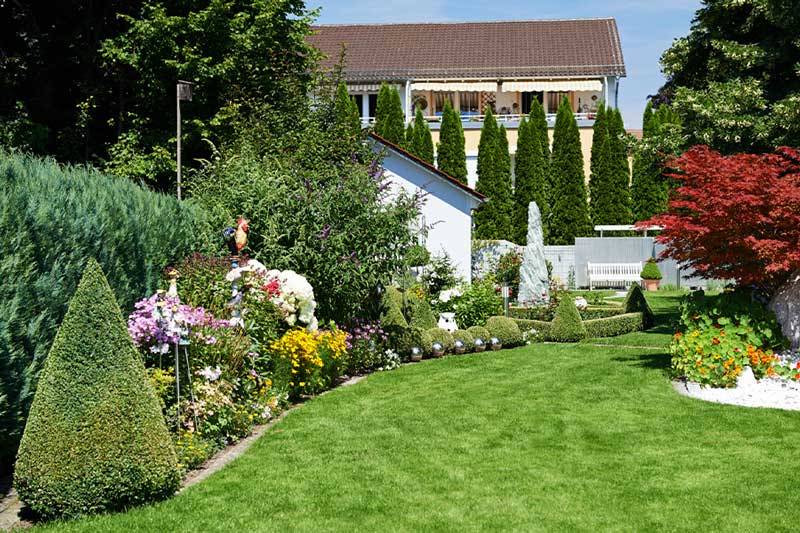
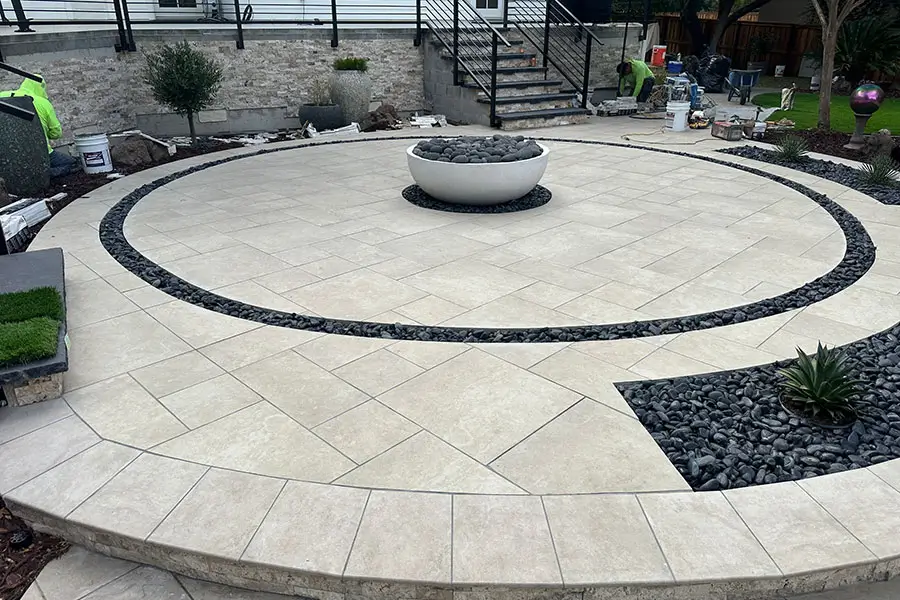
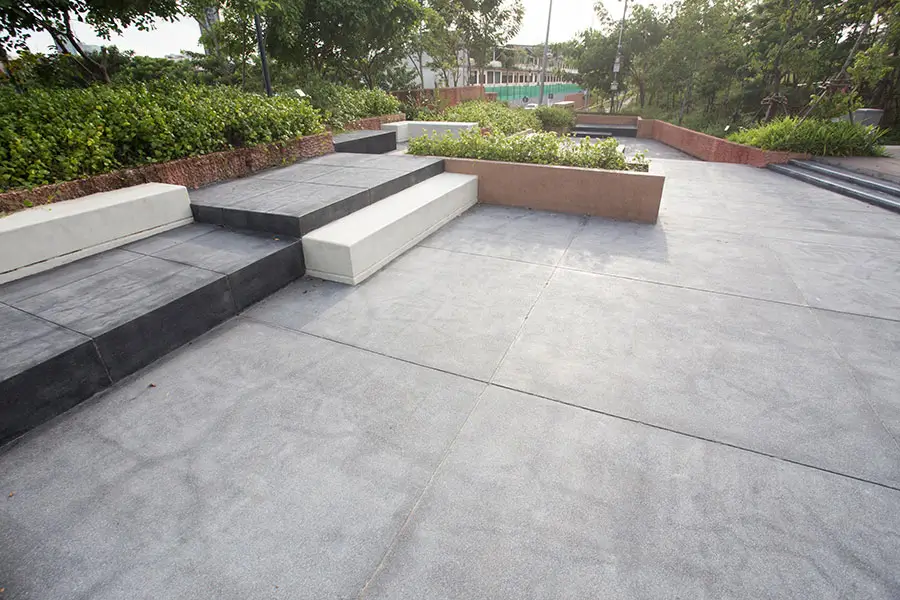
Getting from the driveway to the back door is a project on many properties here. We build steps, landings, walkways, flagstone patios, and boulder work that turn an awkward slope into something you can actually walk with groceries in your hands. Natural stone tends to suit these lots better than manufactured products, since it sits comfortably next to the granite already showing through the hillside.
Access shapes every bid. Narrow driveways, tight side yards, and gates that a machine cannot fit through mean a lot of Placerville hardscape gets built with smaller equipment and more hand work. We look at that honestly during the estimate rather than assuming a truck can back up to the work area.
Freeze and thaw is a real consideration at this elevation, unlike down on the valley floor. Base preparation, drainage under the surface, and joint material all get selected with winter in mind so a patio does not heave or shift after its first cold snap.
Water arrives fast in Placerville. Winter storms come in warm and heavy, rock sheds most of what falls on it, and the runoff finds whatever path already exists, which is often a driveway, a walkway, or the low side of a foundation. The work is less about removing water and more about deciding where it goes before it decides for itself.
We tie downspouts into solid line, cut interceptor drains above the areas that matter, build dry creek beds where the volume is high, and set catch basins at the natural collection points. Where a driveway funnels water toward the garage, a properly placed trench drain usually ends the problem in a day.
Summer irrigation runs on the opposite logic. Many properties here draw from a well or a district line with real limits, so efficiency is not optional. Drip on planting beds, pressure regulation for the elevation change across a sloped lot, and controllers set for short repeat cycles keep plants alive through a dry September without wasting a drop on runoff.
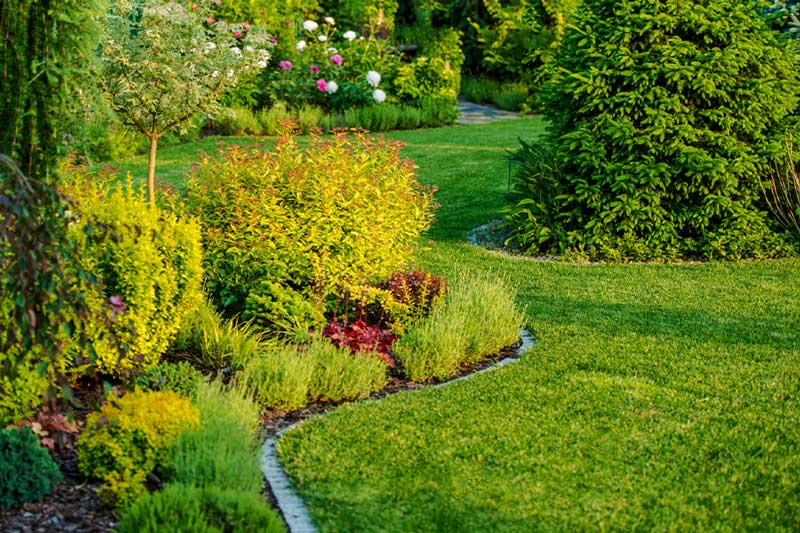
Tom has a house off Cedar Ravine on a lot that steps down from the street. The path from his parking area to the front door was a mix of railroad tie steps from the seventies and a worn dirt track, and after a wet week it was genuinely unsafe.
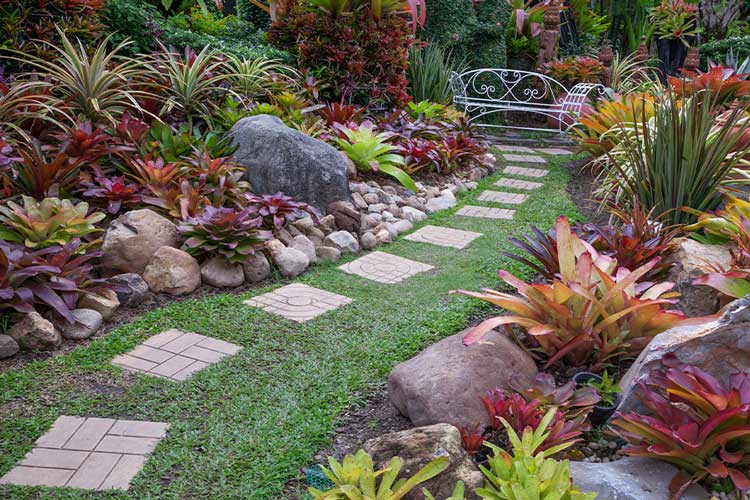
We spent the first visit measuring the fall and figuring out how many risers it would take to make the climb comfortable rather than steep. The old ties came out, and the crew rebuilt the run with stone treads set on compacted base, with a landing partway up so there is a place to rest and set down a bag. A low boulder wall on the uphill side holds back the bank that had been sloughing onto the path.
While the ground was open, we ran a drain line from the two downspouts on that side of the house and daylighted it below the steps so runoff stops crossing the walkway entirely. Tom filled in around the new stonework with low water plants we picked for the shade under his oaks. He mentioned later that the steps were the first thing every visitor commented on.
Foothill work is harder than flat ground work, and the difference shows up years later. This is what you get from our team.
Give us a call and we will come look at the property before quoting anything.
Yes, with the right plant list. Dry shade tolerant natives and grasses do well under pine and oak canopy. We also plan for needle drop so the beds stay tidy without constant raking.
A trench drain or interceptor drain placed above the problem area, tied into a solid line with a proper outlet, resolves most driveway runoff. We look at where the water starts, not just where it collects.
Plenty. Salvia, lavender, rosemary, manzanita, and many ornamental grasses are rarely browsed and hold their appearance through the seasons. No plant is fully deer proof, but a good list makes a large difference.
Yes. Tight access is common in Placerville and we plan for it with smaller equipment and hand work where needed. We will tell you during the estimate how access affects the timeline.
We work in Placerville and nearby El Dorado County communities including Diamond Springs, Camino, Shingle Springs, El Dorado, and Cameron Park. Contact us to confirm scheduling.
Estimated Monthly Payment