
Almost nothing in Auburn is flat. The town spills down toward the American River canyon at around 1,300 feet, and a typical property here involves a slope, a cut bank, a set of steps, or all three. Landscaping in that terrain is as much a structural conversation as an aesthetic one.
Adams Pool & Landscape Specialties handles design, planting, retaining walls, patios, steps, grading, erosion control, irrigation, and drainage throughout Auburn and the surrounding Placer County foothills. Our crews stay with the company for careers, not seasons, and bring more than 500 years of combined experience to the properties they work on.
The housing stock runs the full range, from Gold Rush era homes near Old Town to 1970s hillside builds to newer construction pushing out toward the ridges. Each of those eras left behind a different set of landscape problems, and we have worked on all of them.
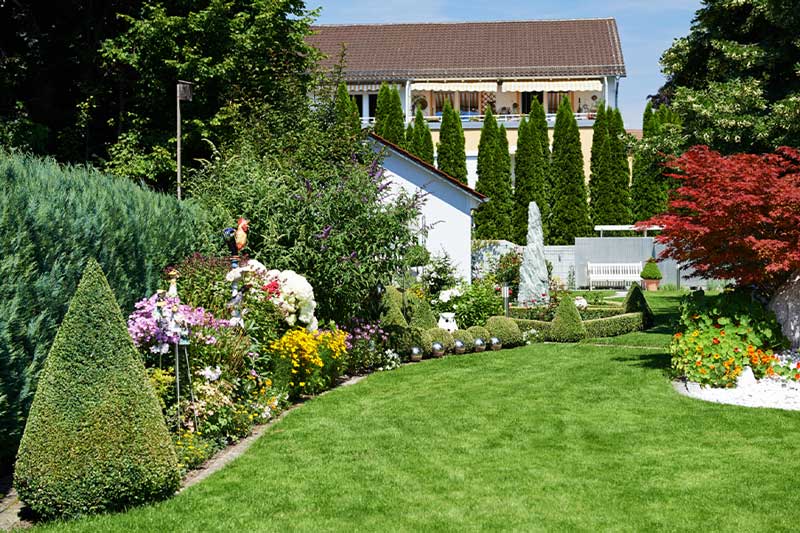
Living in oak and pine country means designing a yard with two goals at once. It has to look like somewhere you want to spend a summer evening, and it has to give your house room to breathe if fire ever moves through the canyon. We plan Auburn properties with both in mind rather than treating defensible space as an afterthought that ruins the view.
That usually means keeping the first several feet around the structure lean, using hardscape, gravel, and low growing plants close in, then stepping up to larger plantings and specimen trees farther out. Spacing matters as much as species choice, since a well spaced yard slows fire while a continuous hedge line carries it. Native and low resin plants like ceanothus, coffeeberry, toyon, and ornamental grasses do the visual work without stacking fuel against the wall.
Irrigation feeds into the same plan. Zones nearest the house get enough water to stay green through September, while outer areas run on drip and go dormant naturally. The result is a yard that reads as intentional rather than cleared.
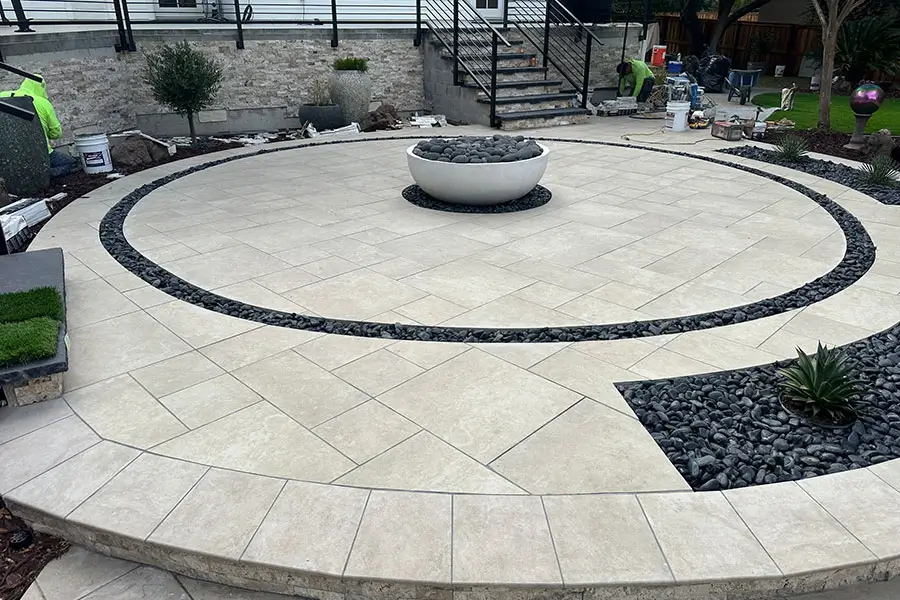
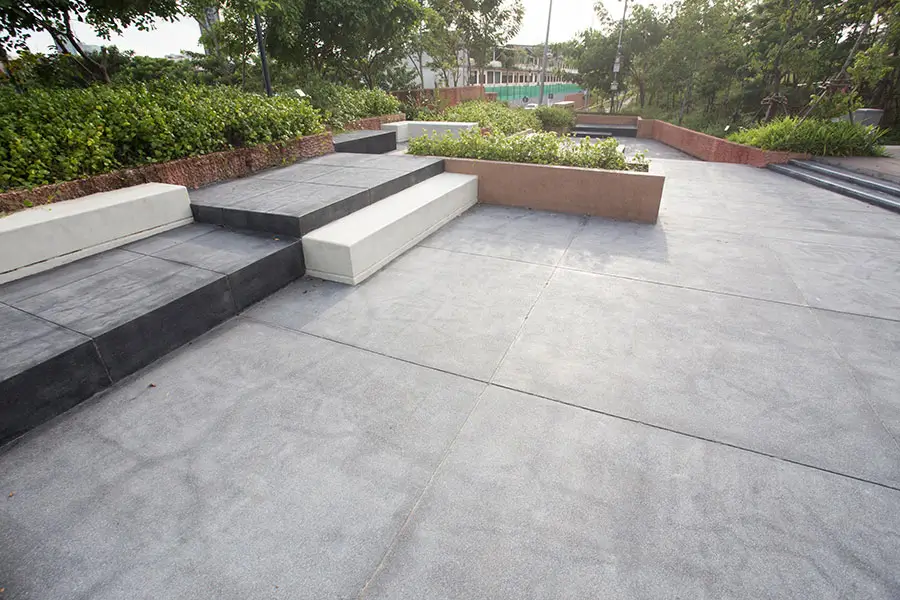
Usable outdoor space in Auburn is created, not found. Terracing a hillside into level rooms is the single biggest change most properties here can make, and it is the work we do most often in this town. We build segmental block and poured walls, cut in steps and landings, and finish the flat areas with pavers, stone, or concrete depending on the look you want and how the ground behind the wall drains.
Foothill clay holds water, and water is what pushes walls over. Every wall we build gets proper base preparation, drain rock behind the face, and a perforated pipe daylighted where it can actually discharge. Skipping those steps is why so many older walls around Auburn are leaning today.
An existing wall usually tells you when it is in trouble.
Any of those are worth a look before the next wet winter rather than after it.
Storm runoff in Auburn does not sit still, it travels. Water shed off a roof or a driveway at the top of a lot picks up speed on the way down and takes soil, mulch, and sometimes part of a planting bed with it. Managing that path is the difference between a hillside that holds and one that keeps showing up in your neighbor’s driveway.
We slow and redirect runoff with swales, dry creek beds, French drains, downspout tie ins, and check dams where the fall is steep. Bare cut banks get stabilized with deep rooted plantings, jute netting, or rock facing depending on the pitch. On the irrigation side, sloped ground demands short cycle watering with pauses so water soaks in instead of sheeting off, and we program controllers accordingly.
Well served properties are part of the picture too. Where a home runs on a well or a shared system, we design zones conservatively and lean on drip so the landscape is not competing with the household through a dry September.
Susan owns a home in the Skyridge area on a lot that drops off hard behind the house. Every winter, runoff from the upper yard cut a new channel through her back planting bed and left a fan of gravel across the lower patio. She had been raking it back into place for three years.
We started at the top of the slope and worked down. The crew cut a swale above the bed to intercept water before it ever reached the plants, lined it as a dry creek so it looked deliberate, and tied the downspout on that side of the house into a solid line that daylights below the patio. Then we built a low block wall to hold the bed itself and backfilled it with drain rock behind the face.
The plants that had been washing out got replaced with deeper rooted natives spaced to knit together over a couple of seasons. Susan added a small flagstone landing at the base of the steps while we were set up. She told us the following spring was the first one she did not spend a weekend shoveling gravel.
Hillside work rewards experience and punishes shortcuts, so it is worth knowing who is doing it. This is what we bring to an Auburn project.
If your property has a slope you have been fighting, we are glad to walk it with you and talk options.
Defensible space is about spacing and plant choice, not bare ground. Keeping the zone closest to the house lean, breaking up continuous vegetation, and choosing low resin plants gets you there while keeping the property attractive.
Height and location determine that. Lower garden walls often do not require one, while taller structural walls typically do. We will tell you which category your project falls into before work starts.
Almost always trapped water. Clay soil holds moisture and pushes against the back of the wall, so drain rock and a functioning drain line behind the face are what keep a wall standing long term.
Yes. We intercept water above the slope with swales or drains, stabilize the face with deep rooted plants or rock, and give runoff a controlled path down. Most slopes need a combination rather than one fix.
We work throughout Auburn and nearby communities including Meadow Vista, Colfax, Newcastle, Loomis, and Applegate. Send us your address and we will confirm availability.
Estimated Monthly Payment