
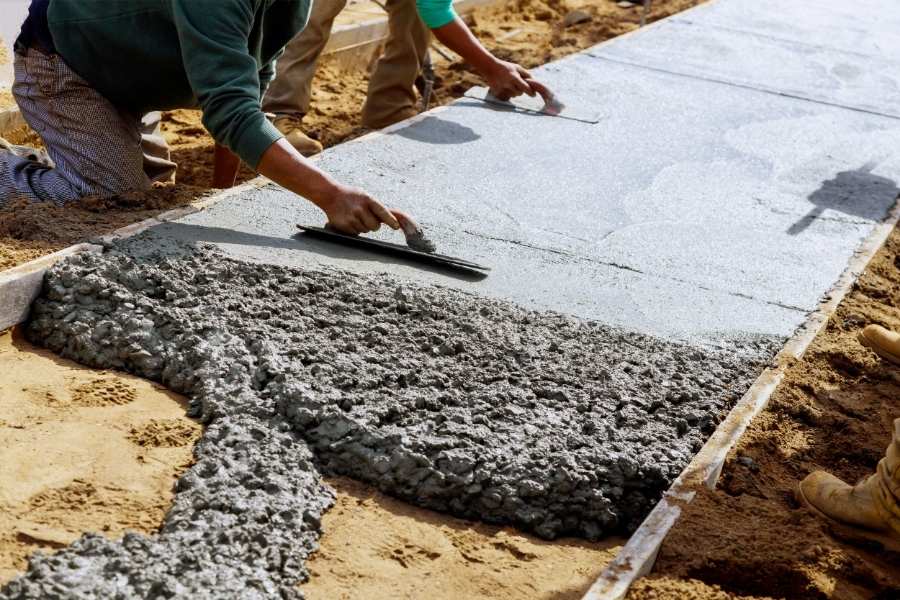
Concrete around outdoor living areas takes constant abuse in Roseville. Cracking from shrinkage, settling, and seasonal soil movement is the most visible issue, but drainage problems and tree root pressure cause just as much damage over time. Standing water erodes the soil supporting the slab, mature root systems lift and separate sections, and small surface problems progress into structural ones faster than most homeowners expect. Catching these early keeps repairs manageable. Property owners planning paver work in Roseville should have existing concrete evaluated first, since the condition of what is already there usually explains what went wrong.
Common Cracks and Fissures in Concrete Surfaces
Cracking is the most familiar concrete complaint, and not all cracks mean the same thing. Identifying the type is what determines whether the fix is cosmetic or structural.
- Shrinkage cracks: Form during curing as moisture leaves the slab, typically fine, random, and non structural. Common when concrete is poured in Roseville summer heat without proper curing protection.
- Settling cracks: Develop when the soil beneath the slab shifts or compacts unevenly. These tend to widen over time and often produce a vertical offset between sections.
- Surface scaling and spalling: Flaking of the top layer, usually traced to poor finishing practice, an over watered mix, or moisture working through an unsealed surface.
- Structural cracks: Wide, progressive, or accompanied by displacement. These indicate a base or drainage failure rather than a surface problem.
Early attention keeps costs contained. A hairline crack sealed this year is a minor expense. The same crack after three winters of water intrusion and soil movement often means section replacement.
Professional assessment matters because the visible crack is rarely the whole story. Working on properties across Roseville, we see that most recurring cracking traces back to inadequate base preparation or drainage rather than the concrete itself, and a qualified concrete contractor evaluates what is underneath before recommending a repair that will just fail again.
How Weather Affects Concrete Durability in Roseville
The local climate puts concrete through a demanding annual cycle.
Summer heat is the first stress. Extended stretches above 100 degrees cause rapid moisture evaporation from fresh concrete, which produces surface cracking and reduces final strength when curing is not properly managed. Pours scheduled in July without adequate protection routinely show plastic shrinkage cracking within days.
Winter brings the opposite problem. Cool temperatures slow curing significantly, and concrete placed in December needs a longer protected cure than most homeowners realize before it carries any load.
Rain and moisture cause damage year round. Unsealed concrete absorbs water, which carries dissolved minerals into the slab and works on it from the inside. Over successive wet seasons this produces surface deterioration and accelerates any existing cracking.
Thermal cycling adds continuous stress. Roseville routinely sees 40 degree daily temperature swings during shoulder seasons, and that repeated expansion and contraction works on control joints and weak points until they open.
Prevention comes down to specification and technique: appropriate mix design, adequate reinforcement, correctly spaced control joints, quality sealing, and drainage designed into the installation rather than added afterward.
Drainage Issues: Why Is Water Pooling a Problem?
Poor drainage is the single most common underlying cause of concrete failure around outdoor living areas, and it produces several distinct problems:
- Soil erosion beneath the slab. Standing water washes out and softens the supporting base, which leads to settling, cracking, and uneven surfaces.
- Safety hazards. Displaced sections create trip edges, and wet concrete surfaces stay slick well after the water clears.
- Pest breeding. Standing water supports mosquito populations, which is a real concern through the long Roseville warm season.
- Damage to adjacent structures. Water directed toward the house rather than away from it reaches foundations, walls, and crawl spaces where the repair costs escalate sharply.
The heavy clay soils common throughout Placer County make this worse. They absorb water slowly and hold it for extended periods, so a grading problem that would drain in hours on sandy soil keeps water sitting against concrete for days.
Correcting drainage means addressing slope, adding subsurface drainage where needed, and directing water to a proper outlet. Around a pool, this work often overlaps with the pool systems themselves, and professional pool repair can identify whether deck drainage problems are also contributing to leaks or damage at the pool structure.
The Impact of Tree Roots on Outdoor Concrete Areas
Mature trees are one of the best features of established Roseville neighborhoods and one of the most persistent threats to concrete flatwork.
Root systems affect outdoor concrete in four main ways:
- Cracking: Expanding roots exert significant upward and lateral pressure, which fractures slabs along the path of growth
- Lifting: Sections get elevated out of plane, creating trip hazards that are a genuine liability on walkways and pool decks
- Drainage disruption: Displaced concrete changes the slope, redirecting water where it was never meant to go and creating pooling
- Aesthetic damage: Visible cracking, separation, and lifted edges degrade the appearance of the entire outdoor space
The pattern is predictable near the older oaks and established landscape trees found throughout neighborhoods like Sierra Gardens and Cirby Ranch. Roots follow moisture, and the space beneath a slab holds it, which is exactly why they head there.
Addressing this early prevents compounding damage. Root barriers, thoughtful tree placement, and coordinated landscape design allow mature trees and hardscape to coexist rather than working against each other. Removing a tree is rarely the only option when the problem is caught before major displacement.
Repair Solutions for Common Concrete Problems
Repair approach depends entirely on the cause and the extent of the damage.
- Assessment first. Determining whether lifting, patching, or replacement is appropriate requires understanding what caused the failure. Repairing a symptom without correcting the cause guarantees a repeat.
- Root barriers. Installed alongside repair work, these redirect future growth away from the slab and protect the investment in the new surface.
- Epoxy injection. Effective for stable cracks, restoring structural continuity and improving appearance without full replacement.
- Mudjacking or polyurethane foam leveling. Raises settled sections back to grade at a fraction of replacement cost when the slab itself is sound.
- Full replacement. The right answer when damage is extensive, when the base needs rebuilding, or when repeated repairs have already failed.
Replacement is also an opportunity. When a slab has reached the end of its life, rebuilding the space with a properly engineered base and a considered patio installation design produces a better outcome than matching what was there before, particularly when the original layout contributed to the drainage problem.
Protecting Your Roseville Outdoor Living Space
Concrete problems rarely appear overnight. Cracks widen, water finds a low spot and stays there, and roots keep growing whether anyone is watching or not. Addressing these conditions while they are still small is what keeps an outdoor space safe, functional, and worth using.
Adams Pool & Landscape Specialties has worked on outdoor living areas throughout Roseville and the greater Placer County region, and we understand how local soils, mature landscaping, and seasonal weather affect concrete over time. If something around your patio or pool deck has started to shift, crack, or hold water, contact our team today for a professional assessment.